

| Sculpture Information | |
|---|---|
| Location | Emmaus College, Jimboomba, Queensland |
| Works | Reflections (2022), Emmaus Cross (2025) |
| Materials | Anodised aluminium, toughened glass, integrated LED (Emmaus Cross) |
| Dimensions | Reflections 7500mm × 1400mm × 600mm (depth varies by pyramid) |
| Status | Both works complete and installed |
Reflections (2022)
Emmaus College commissioned a sculpture for a space outside their new building, Irbyana. The area had been set aside for reflection and gathering, but it needed something to give it identity and purpose.
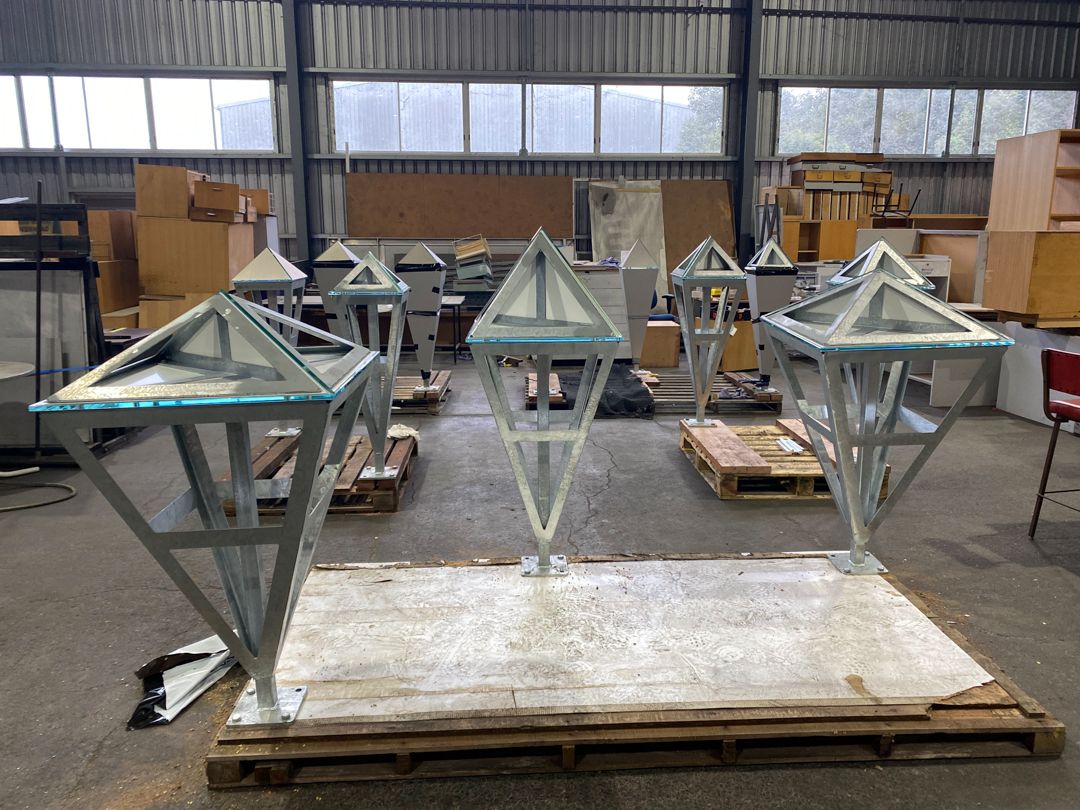
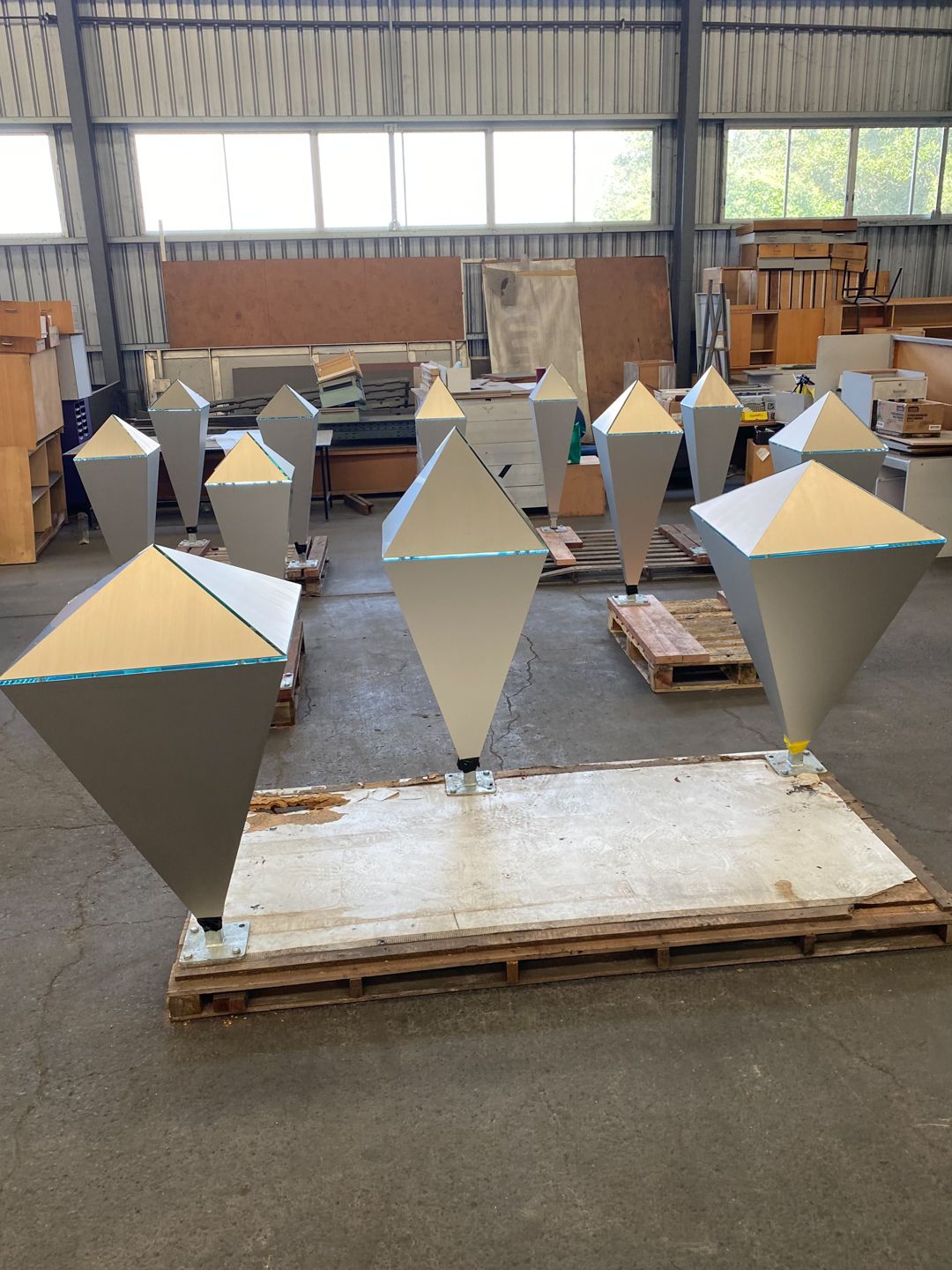
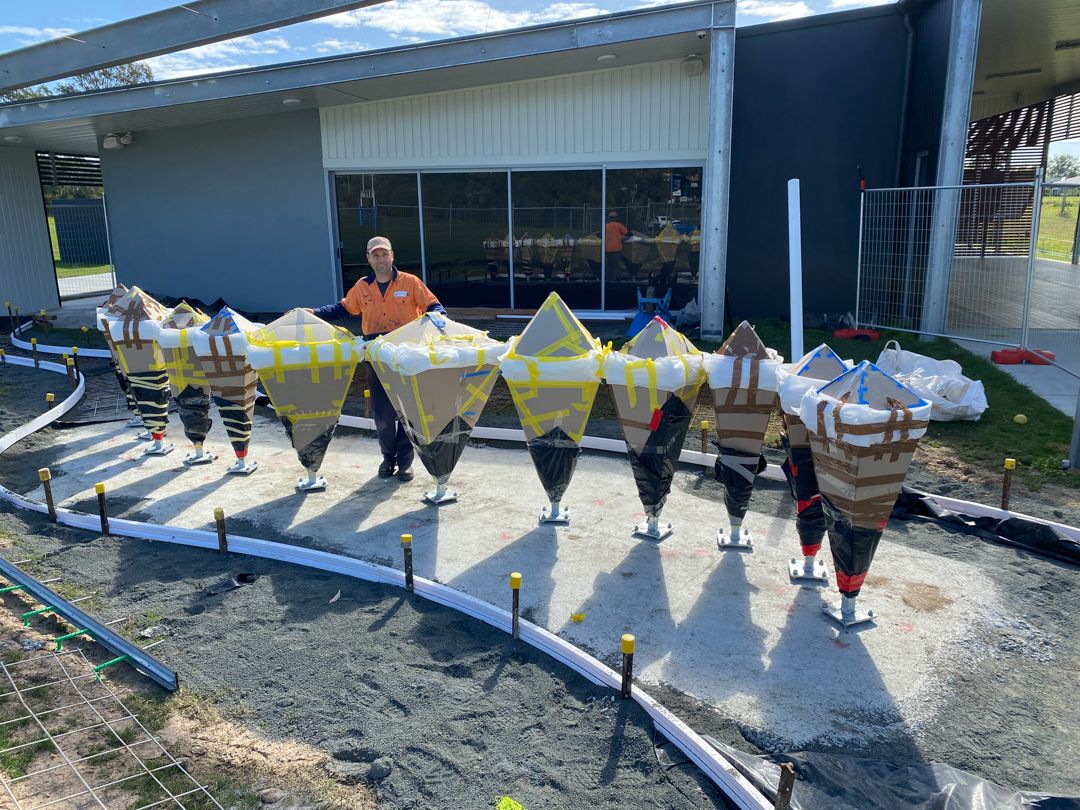
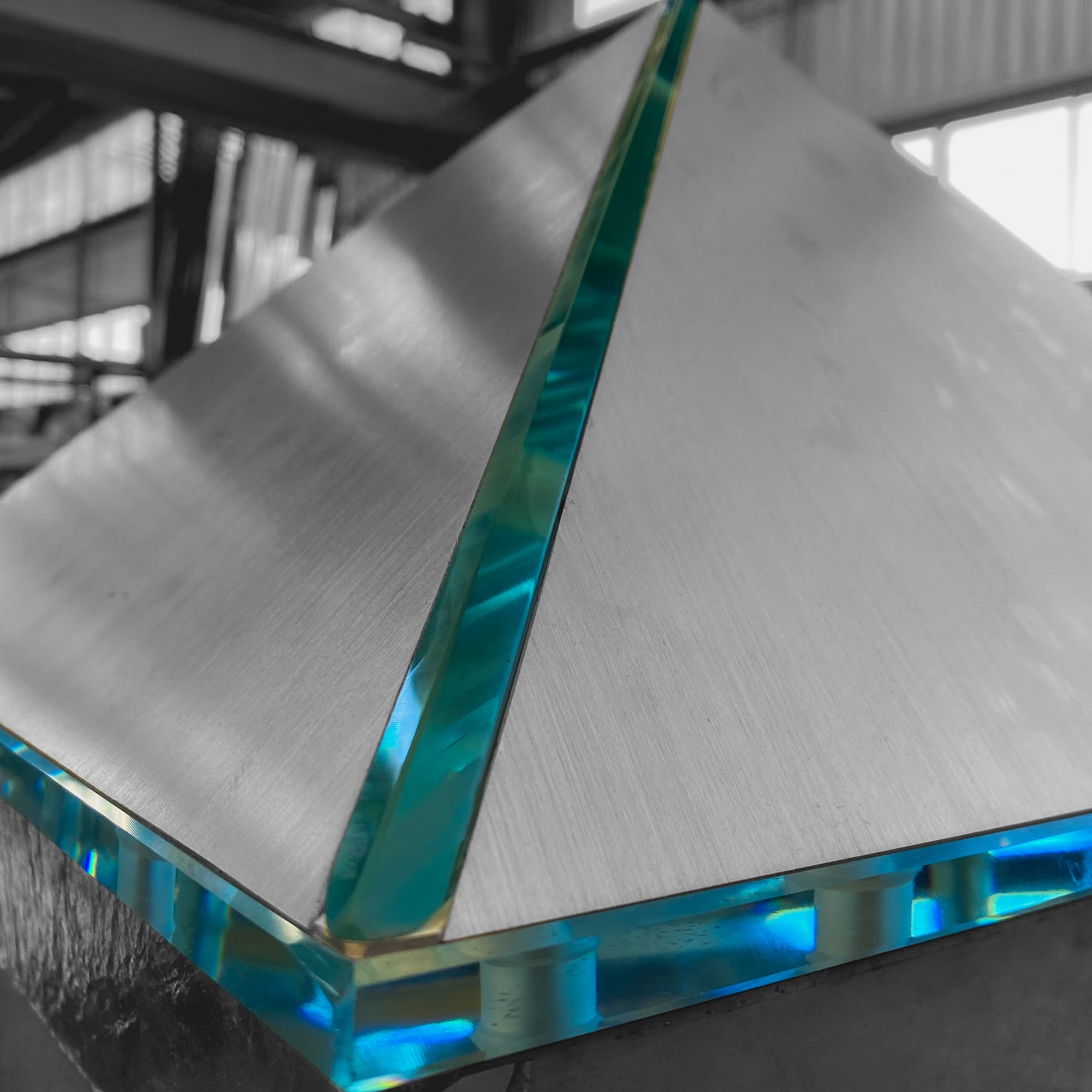
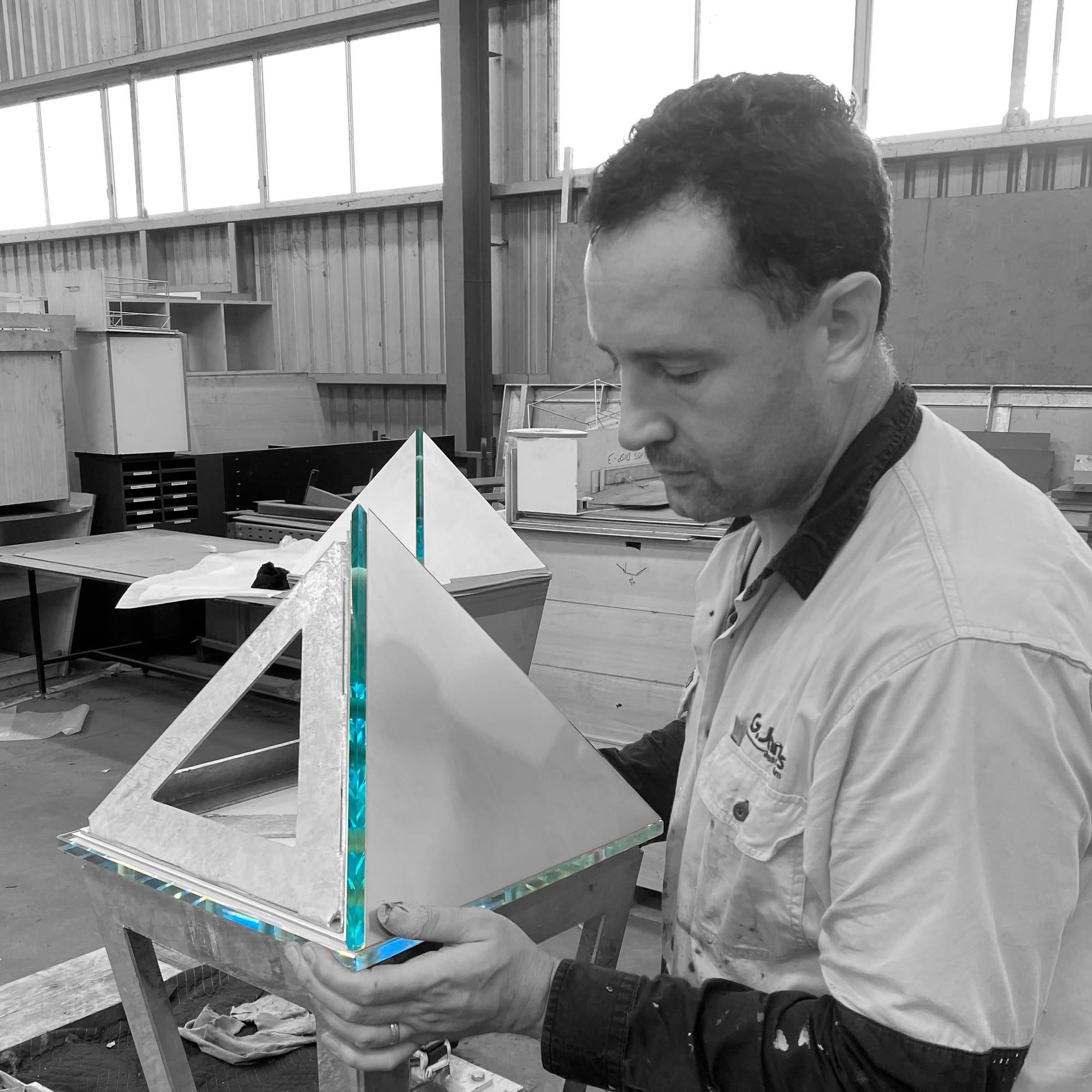
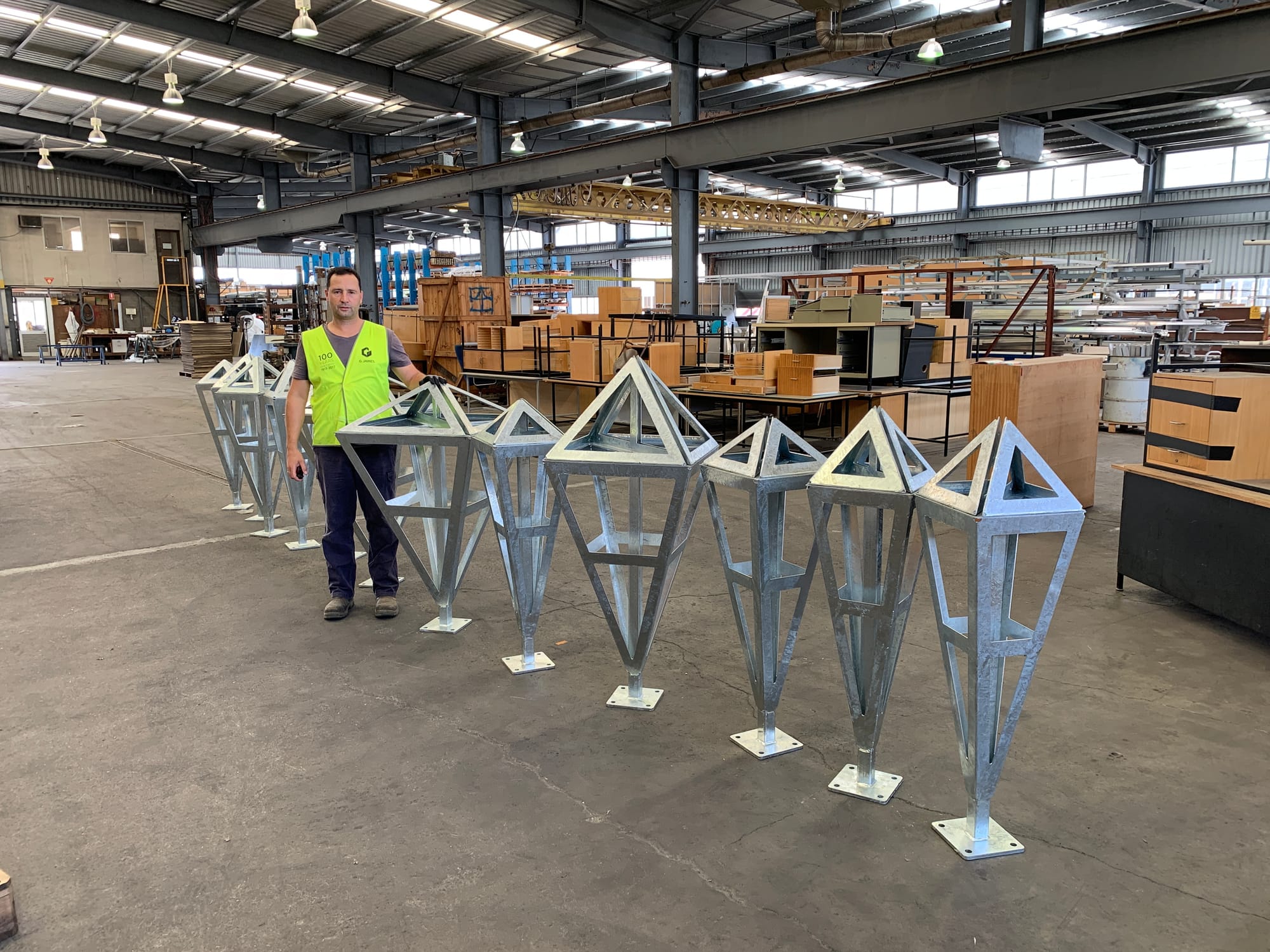
Emmaus, from the story of the road to Emmaus in Luke 24. A journey through hills and valleys, despair turning to faith. The sculpture became a floating landscape: twelve aluminium pyramids rising and falling along a seven-metre span, anchored by a continuous line of blue glass at eye level.
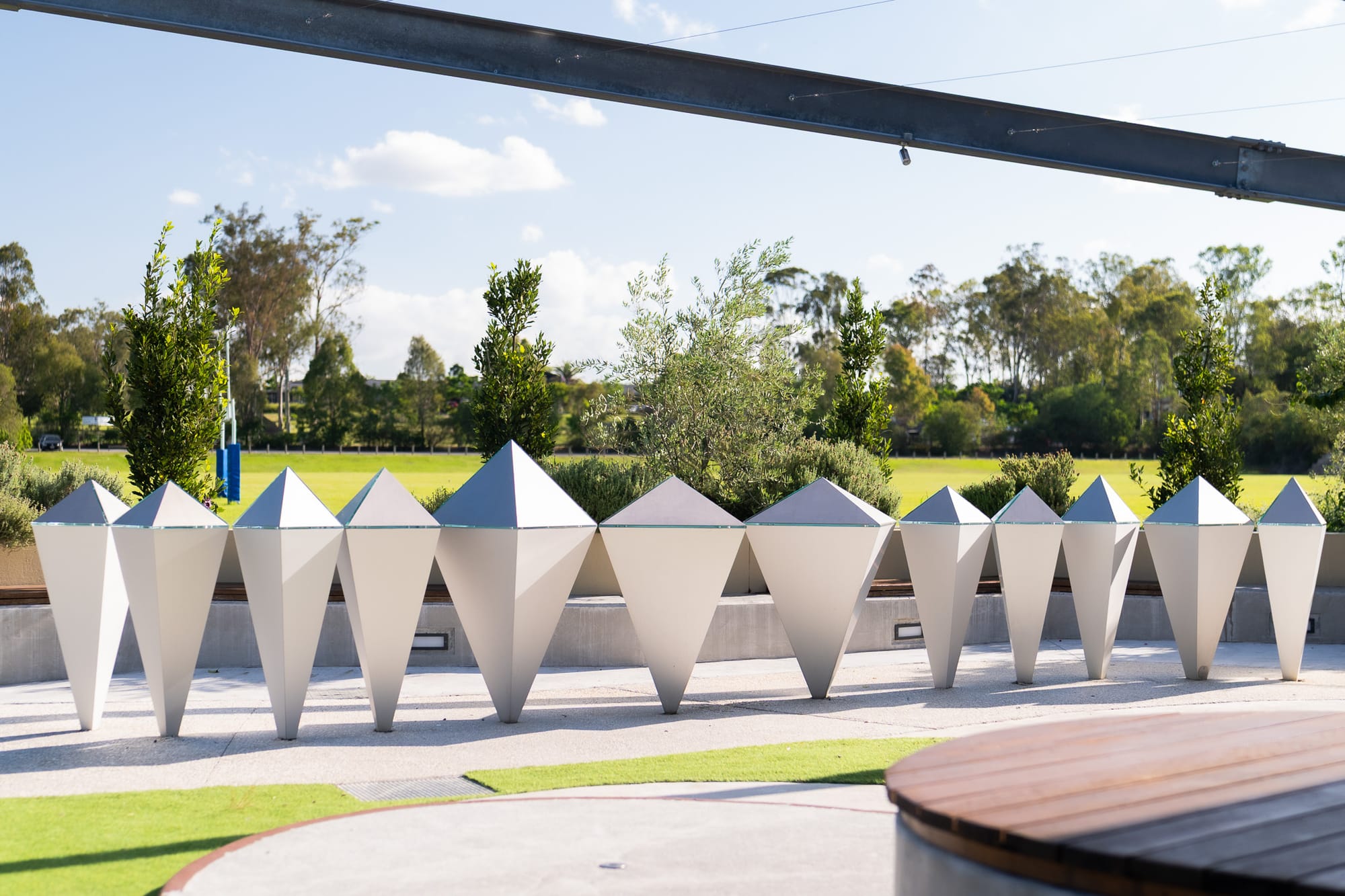
The blue line divides the composition. Above it, peaks. Below, reflections in water. Or the inverse: roots reaching down. The form holds both readings. The topography mirrors the actual road from Jerusalem to Emmaus, compressed into a single horizontal gesture.
This location gets full sun, hail storms, and footballs from the nearby oval. Durability wasn't optional. I chose anodised aluminium for the pyramids because it holds colour without paint or maintenance. The blue glass runs the full length at 1400mm height, creating a consistent datum line regardless of viewing angle. Three years on, the work looks identical to installation day.
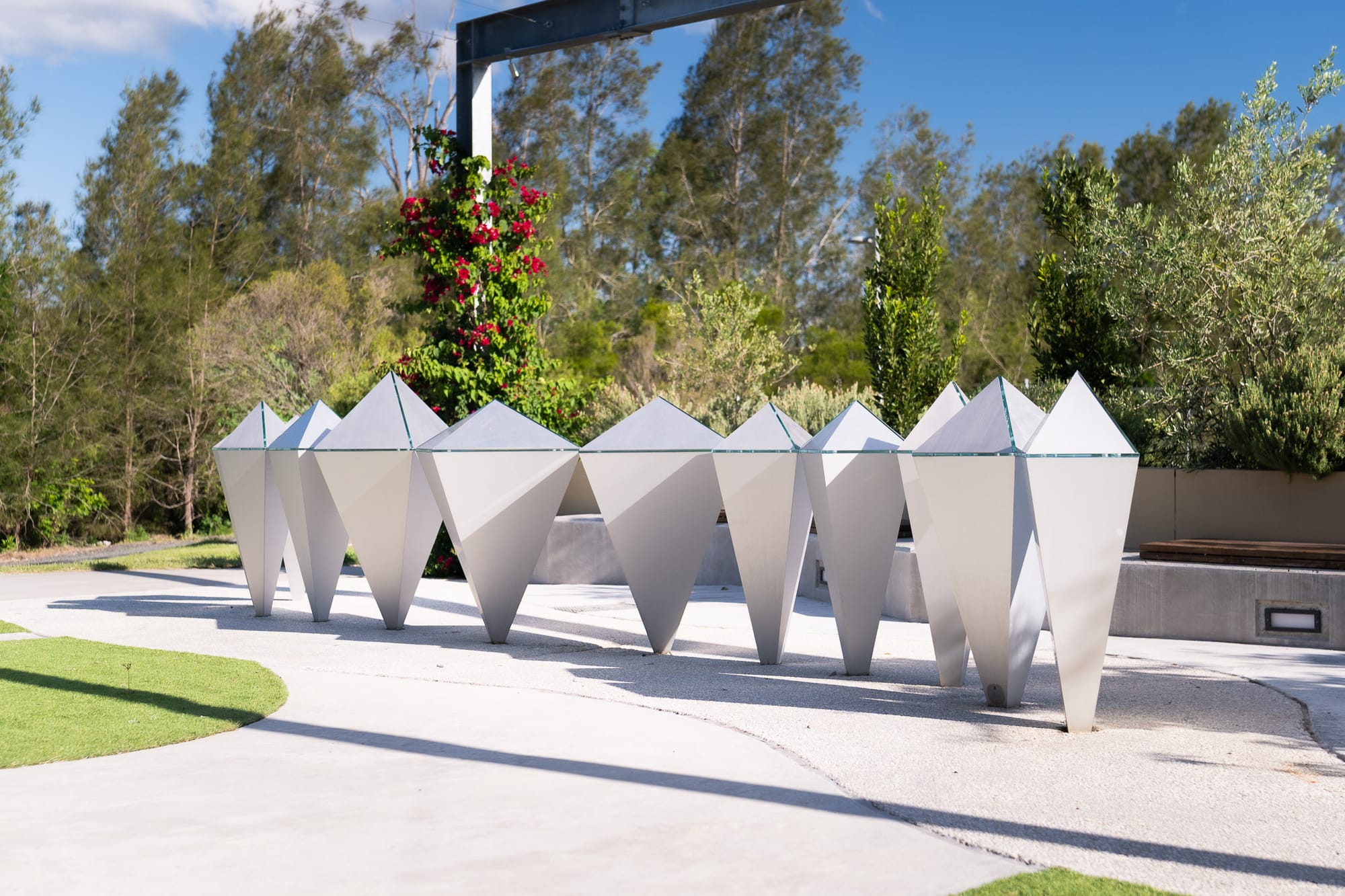
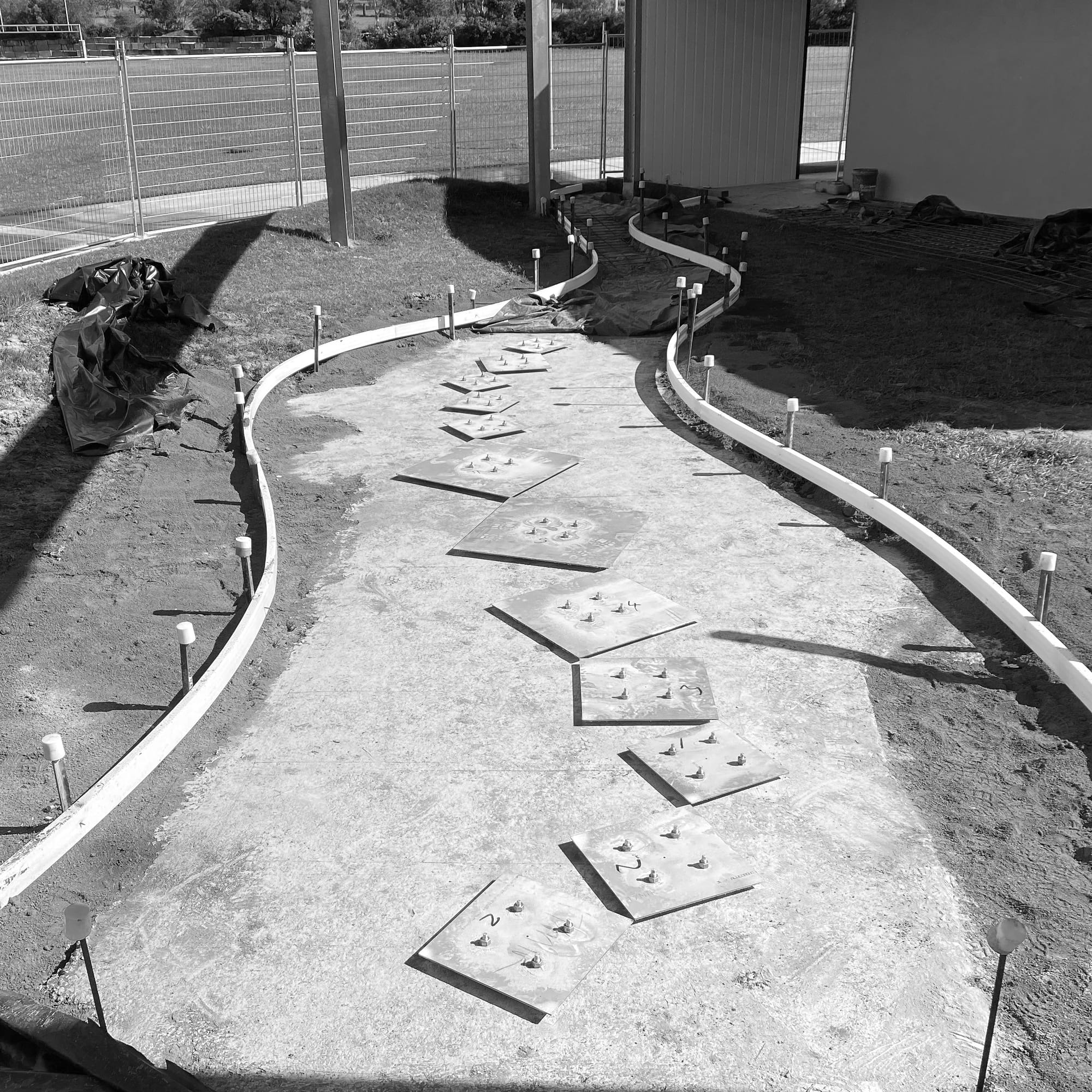
The structure uses a minimal footprint. Each pyramid sits on a single mounting point, giving the entire assembly a floating quality despite weighing several hundred kilograms. That lightness was deliberate. The work needed to feel like it could lift off, not like it was bolted down.
Emmaus Cross (2025)
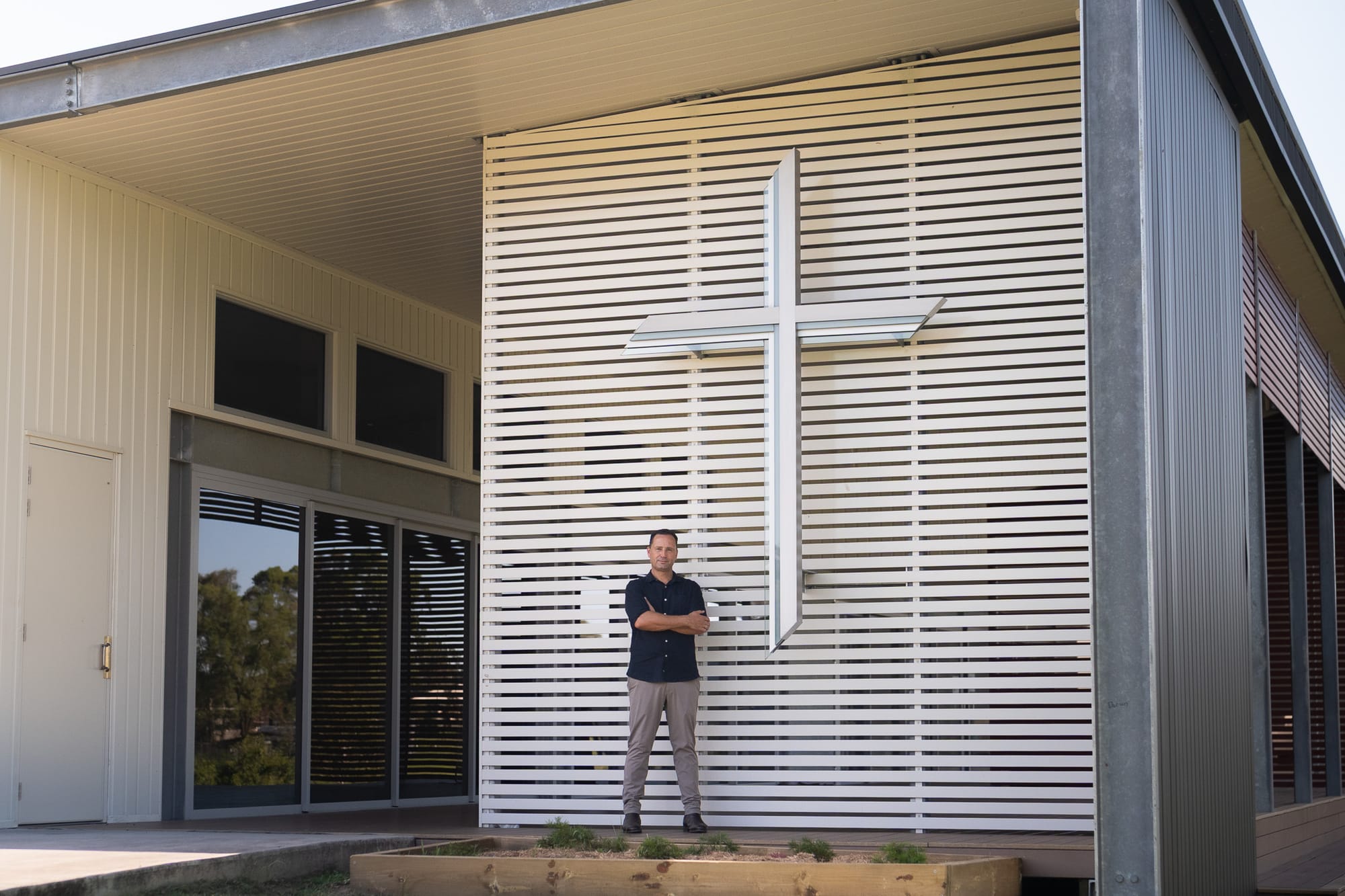
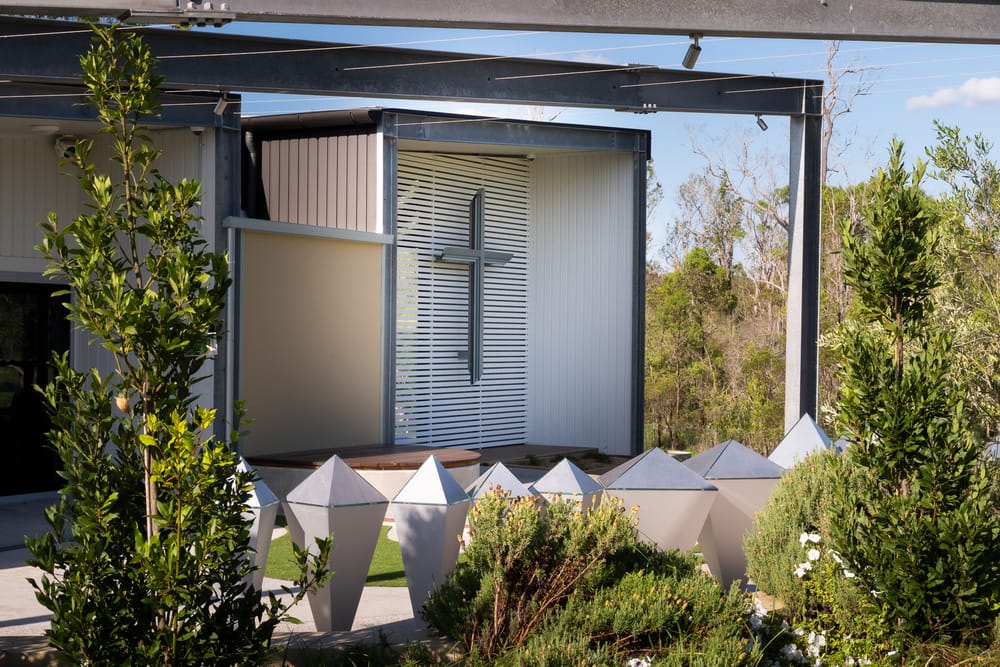
In 2024, Emmaus College commissioned a second work. They wanted something for the building facade itself that would complete the threshold sequence Reflections had started. The brief was specific: a cross, visible from the approach path, integrated with the building's material language.
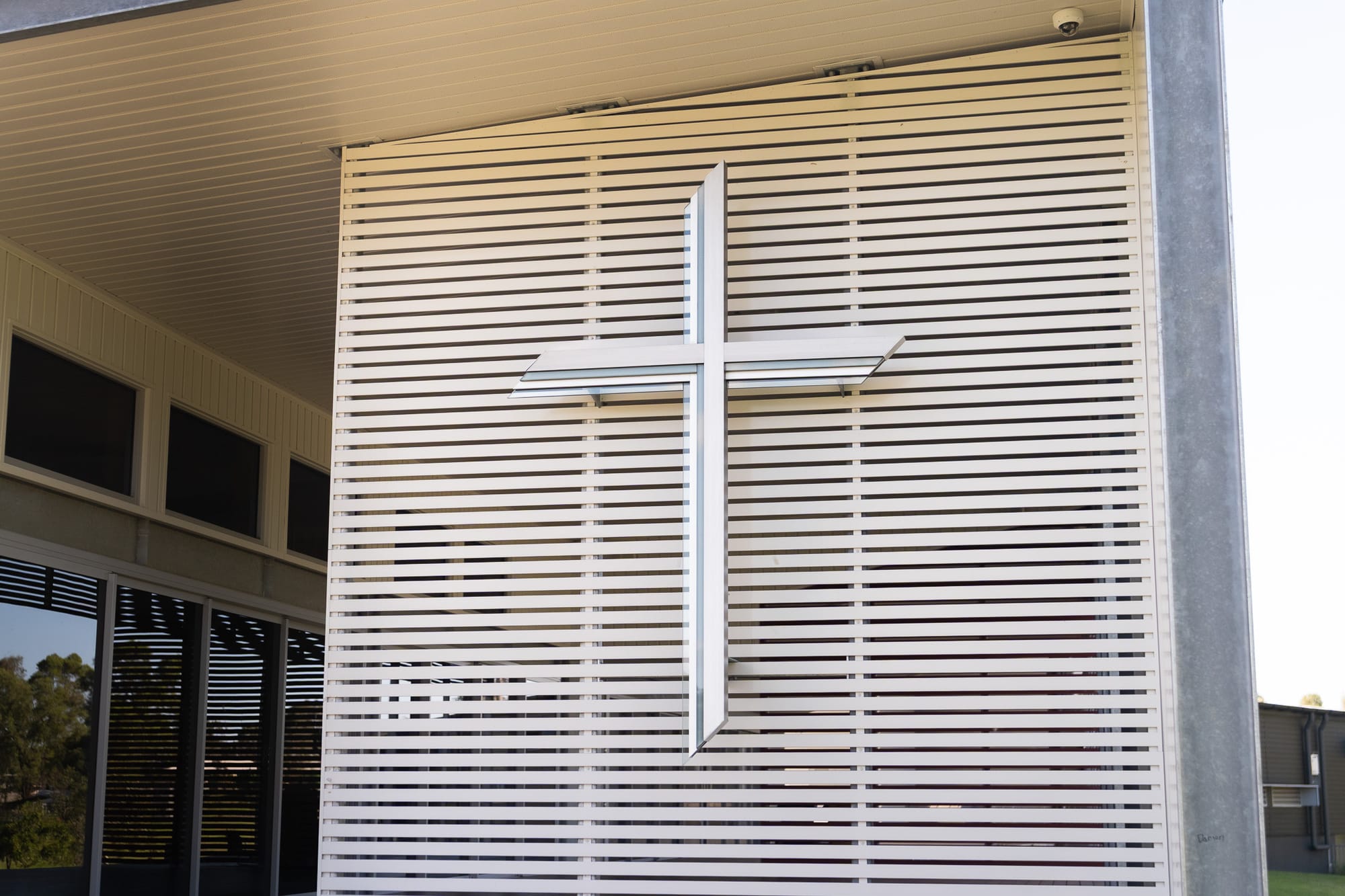
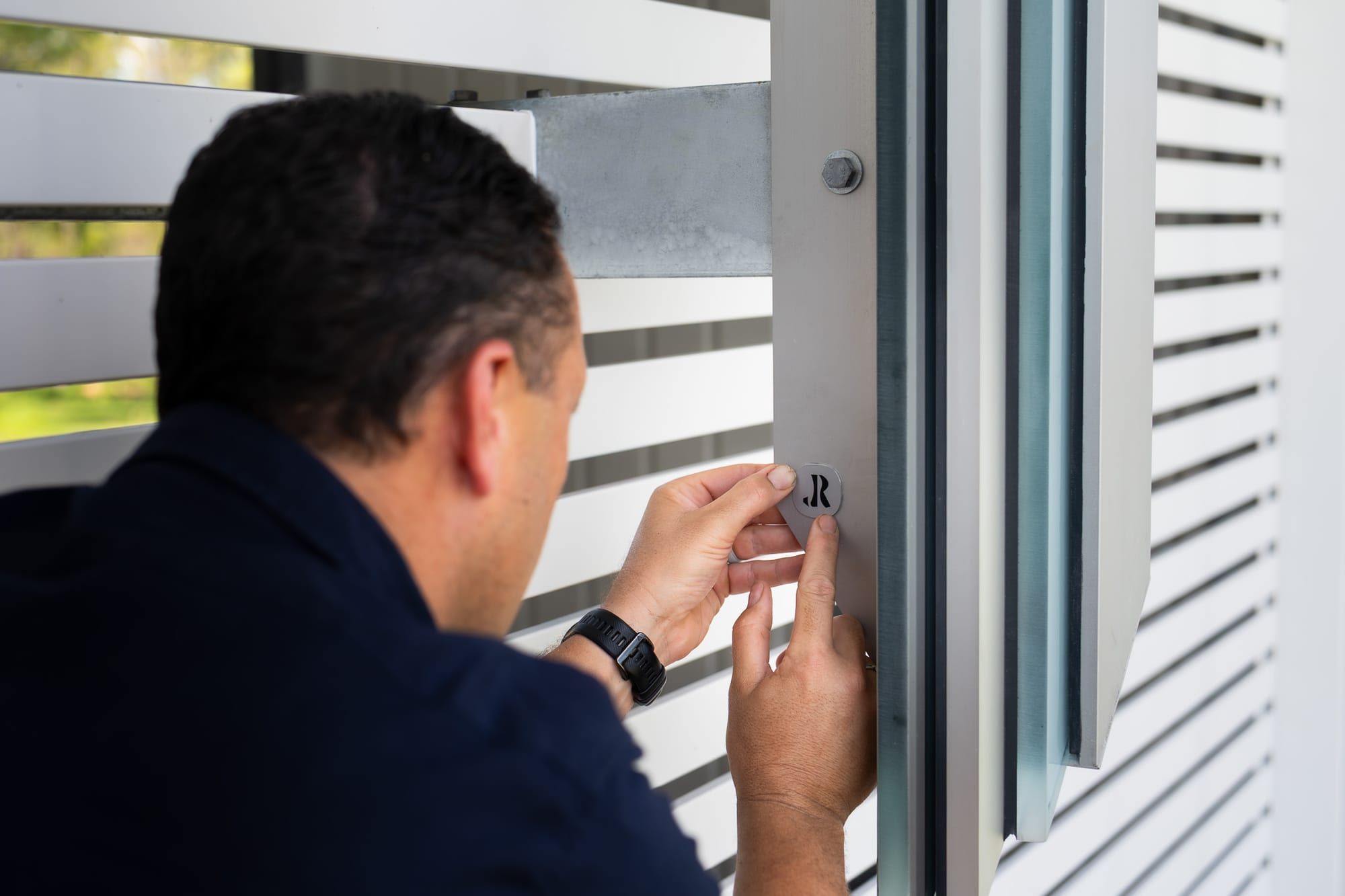
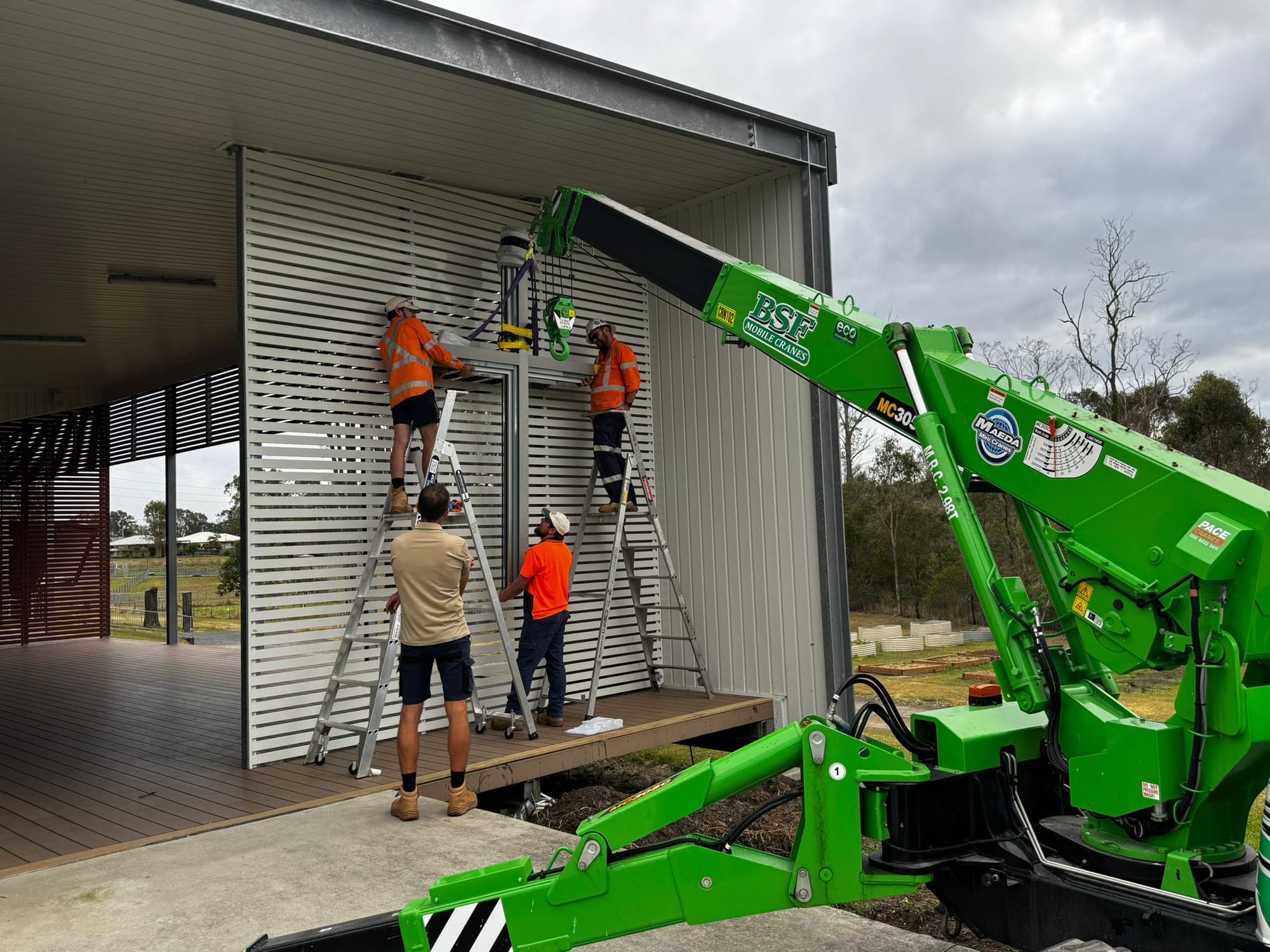
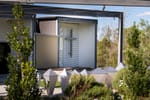
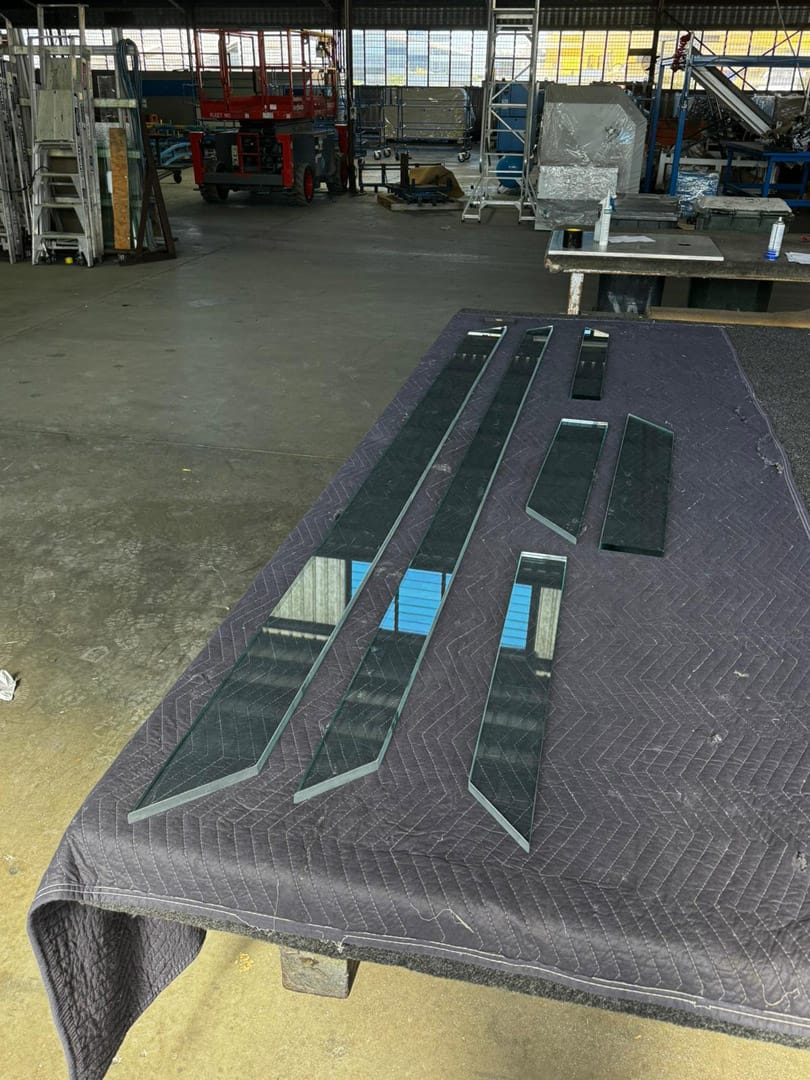
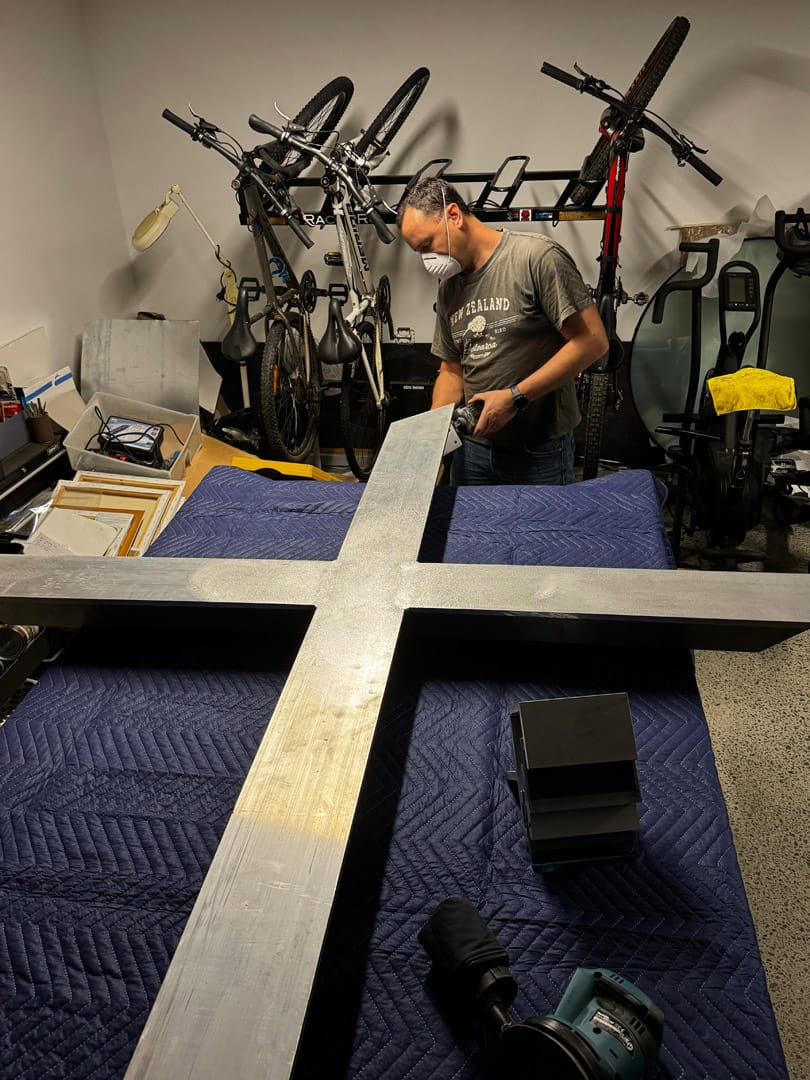
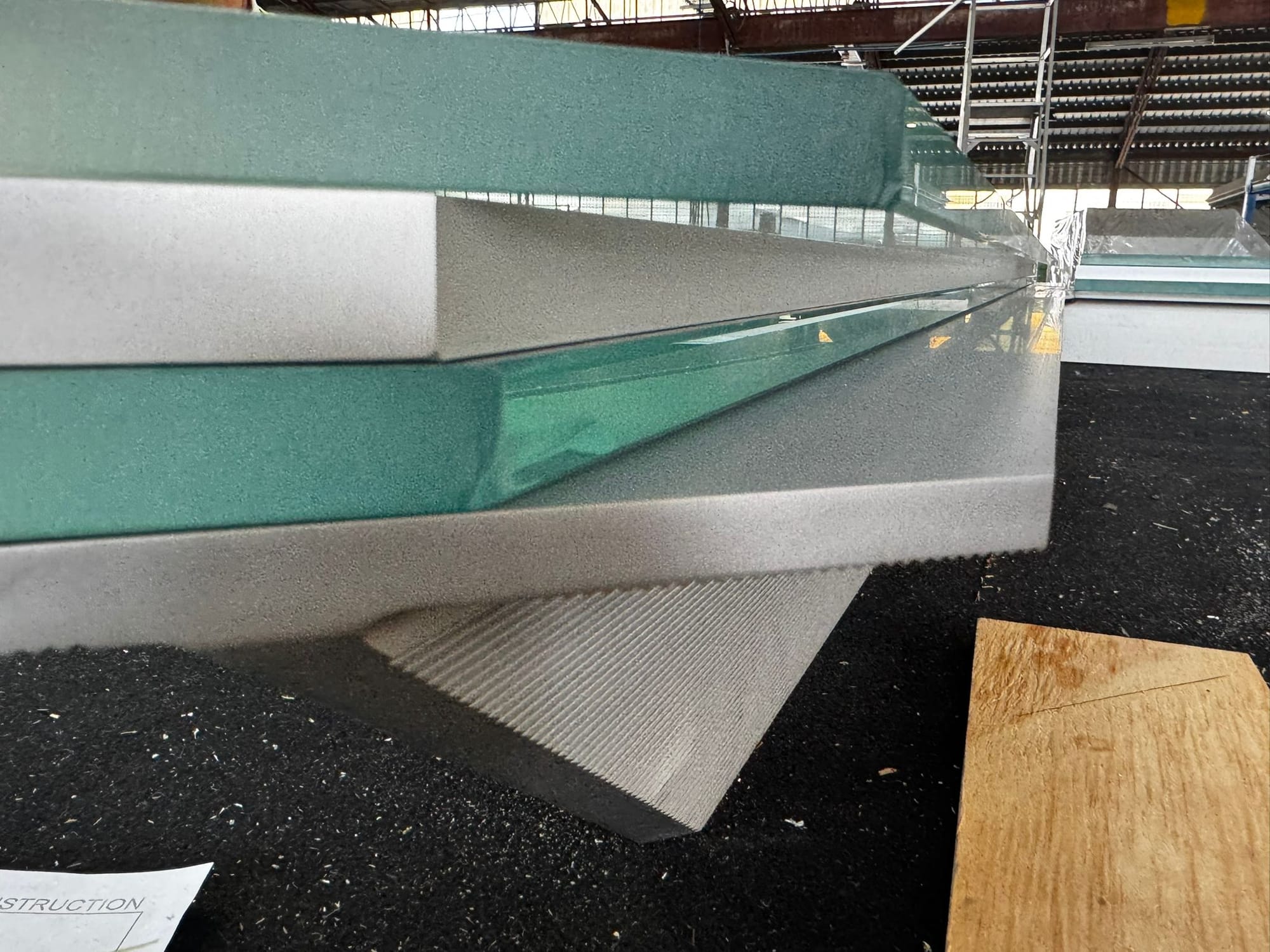
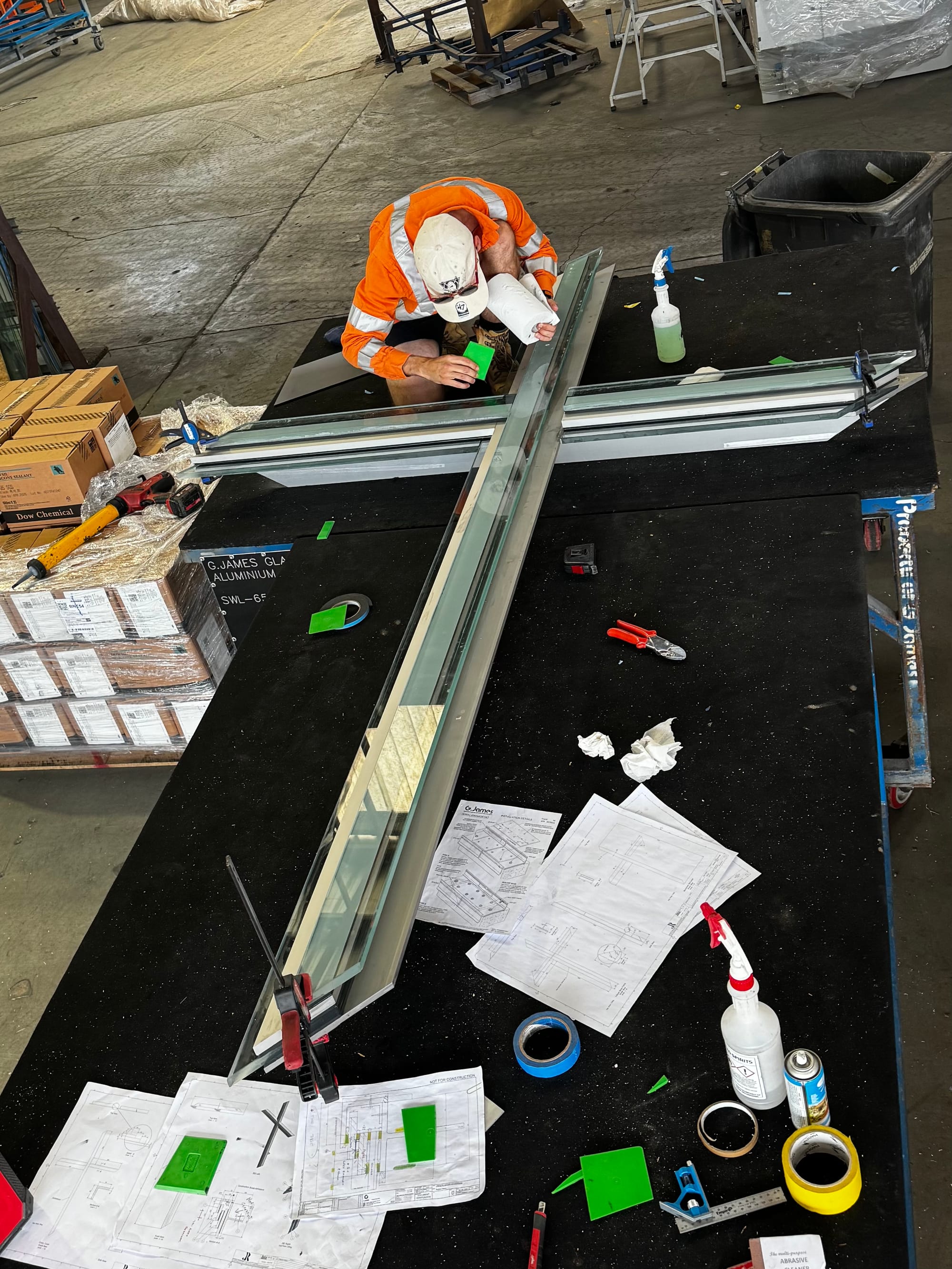
The cross sits directly above the main entrance to Irbyana, aligned with the circulation path students walk each morning. Same materials as Reflections: anodised aluminium and glass. The glass components are edge-lit with concealed LED strip, so the cross glows at night without any visible light source. The lighting is restrained. Just enough to register presence after dark.
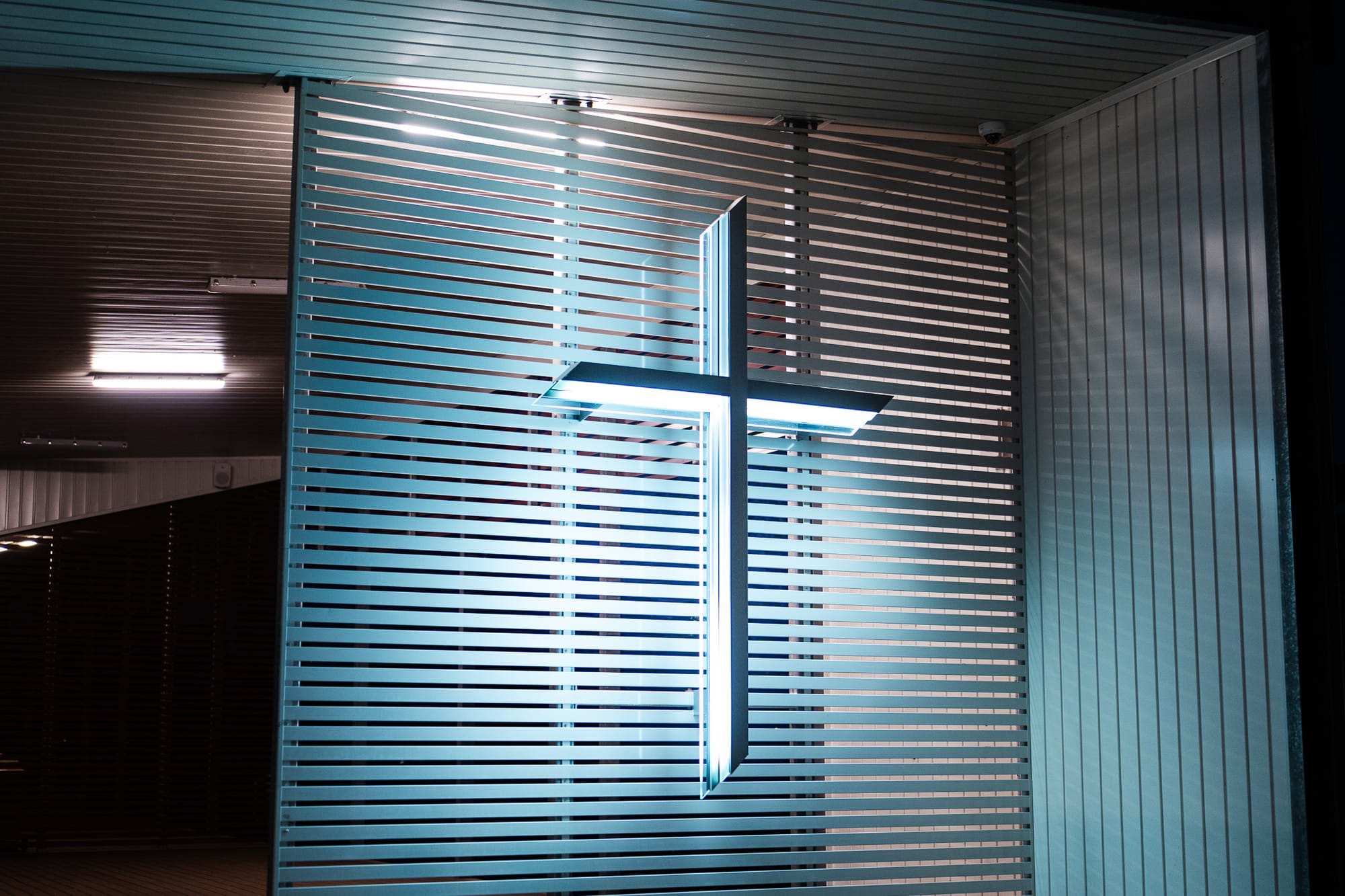
The challenge wasn't technical. It was conceptual. How do you make a second work that belongs with the first without repeating it? Three years had passed. My thinking had shifted. But the materials hadn't changed, and neither had the location. That constraint became the solution.
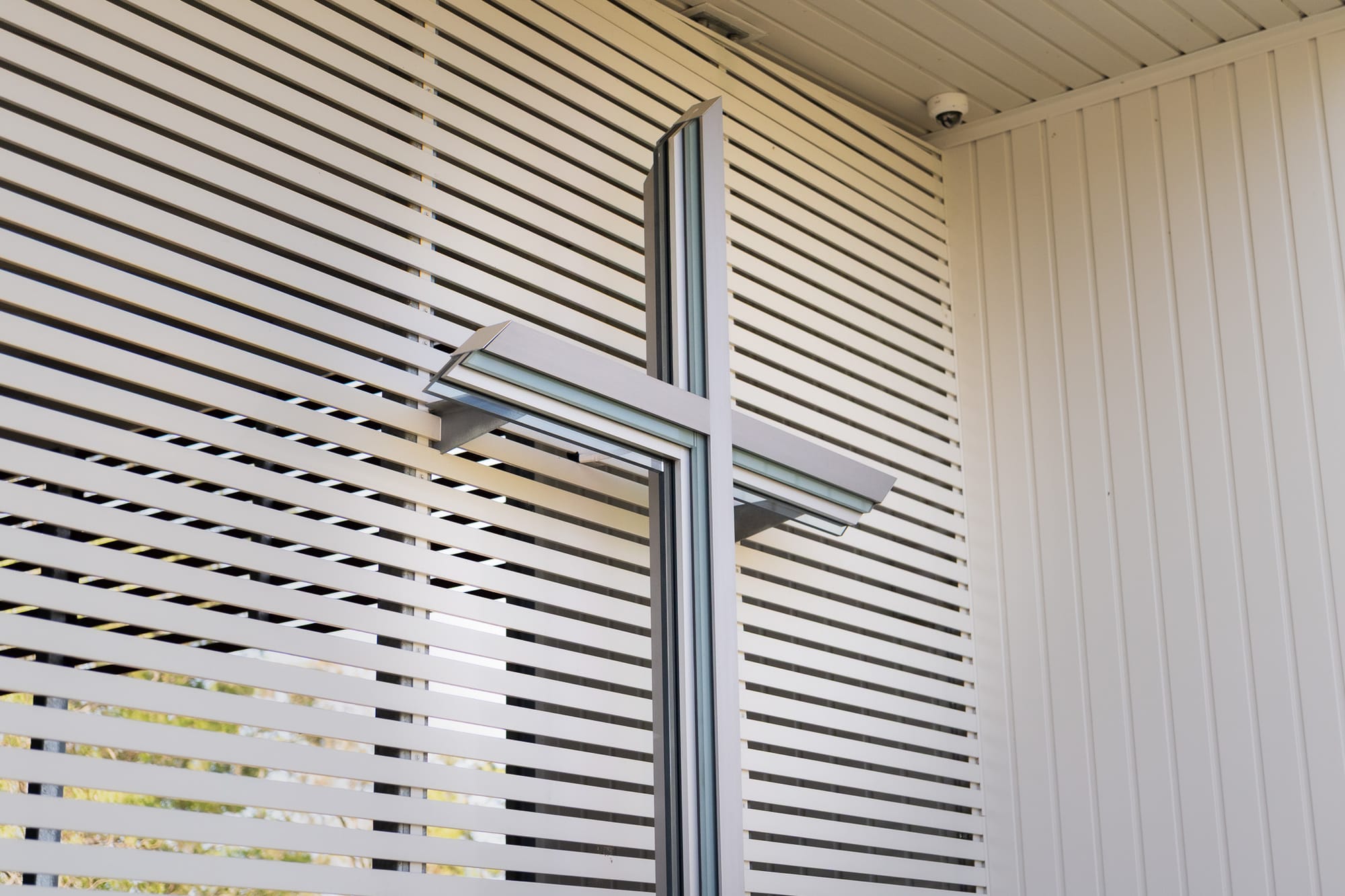
Reflections established a material vocabulary: aluminium, glass, blue, lightness. The cross extends that vocabulary vertically. Where Reflections reads as landscape, the cross reads as marker. Together they frame the entrance. You pass between the landscape and the symbol on your way into the building.
Working Together
I didn't plan a paired commission when I made Reflections. But I made choices that left room for something else. Material choices that wouldn't date. Placement that didn't dominate the entire facade. Restraint in scale.
That's the reality of working in institutional settings. The work has to hold up for longer than you expect, physically and conceptually. If the first piece is too specific or too complete, nothing can follow. If it's durable and open enough, the door stays ajar.
The two works now define the entrance to Irbyana. Different forms, same language. The landscape below, the cross above. However you read the pairing, it frames a threshold.
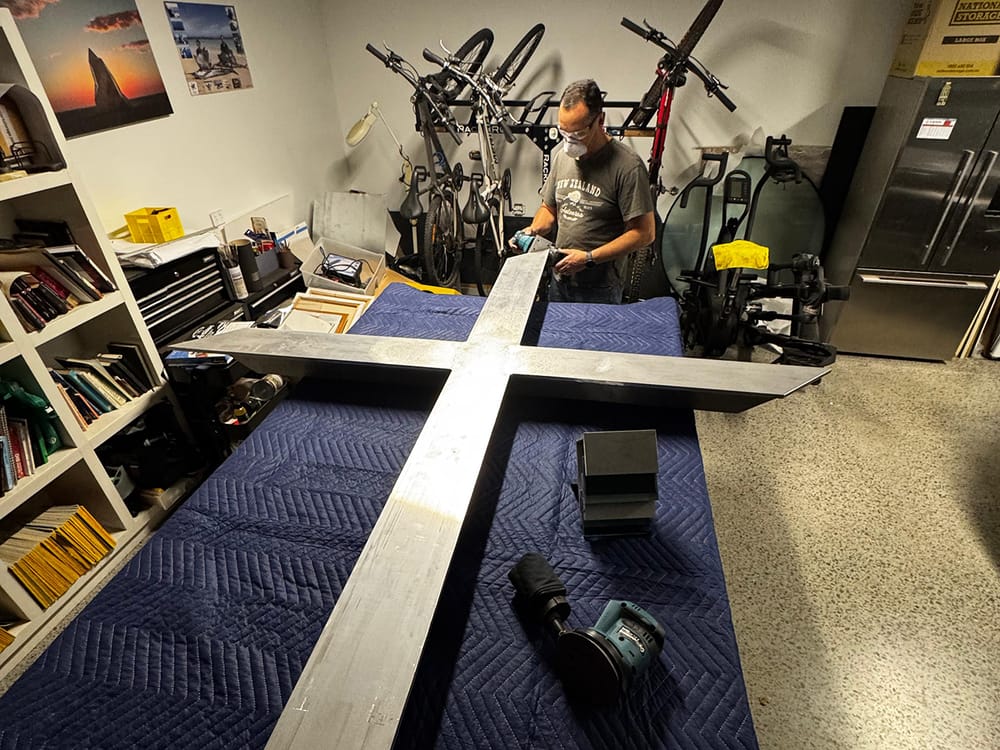
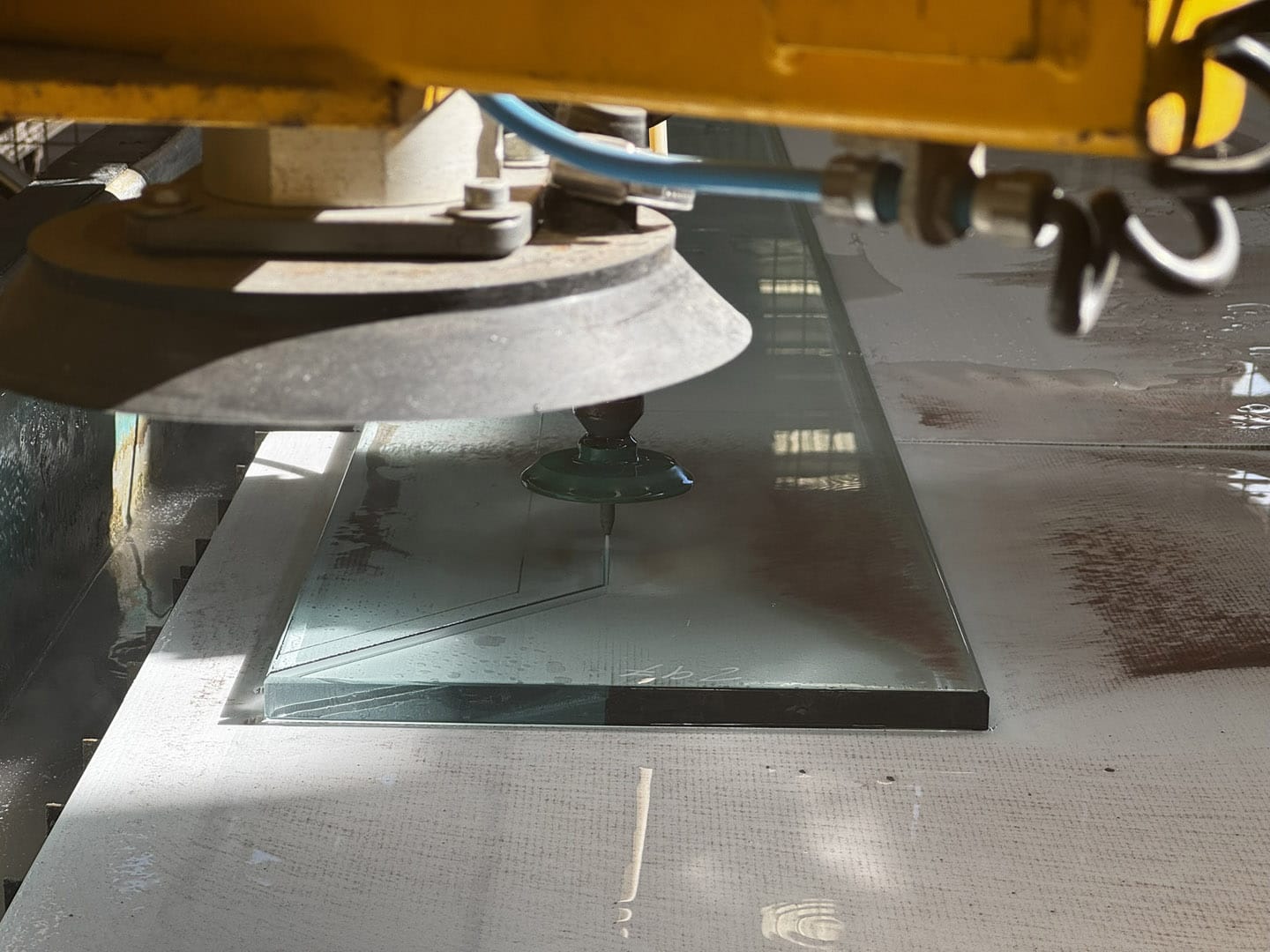
Work in Progress