

| Sculpture Information | |
|---|---|
| Completion | 2019 |
| Commission | Emmaus College, Jimboomba |
| Dimensions | 2,493 mm (W) × 1,100 mm (H) × 100 mm (D) |
| Materials | Anodised aluminium, black mirror glass, black ceramic, slate, aluminium spill, petrified wood, leather, terracotta mosaic, white glass, fabric in glass, yellow glass |
| Status | Permanent installation |
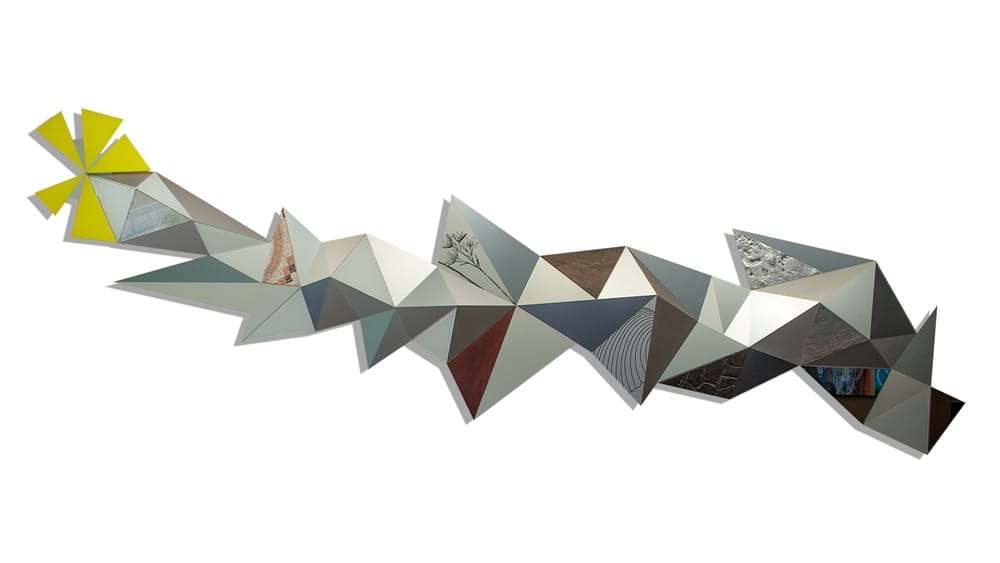
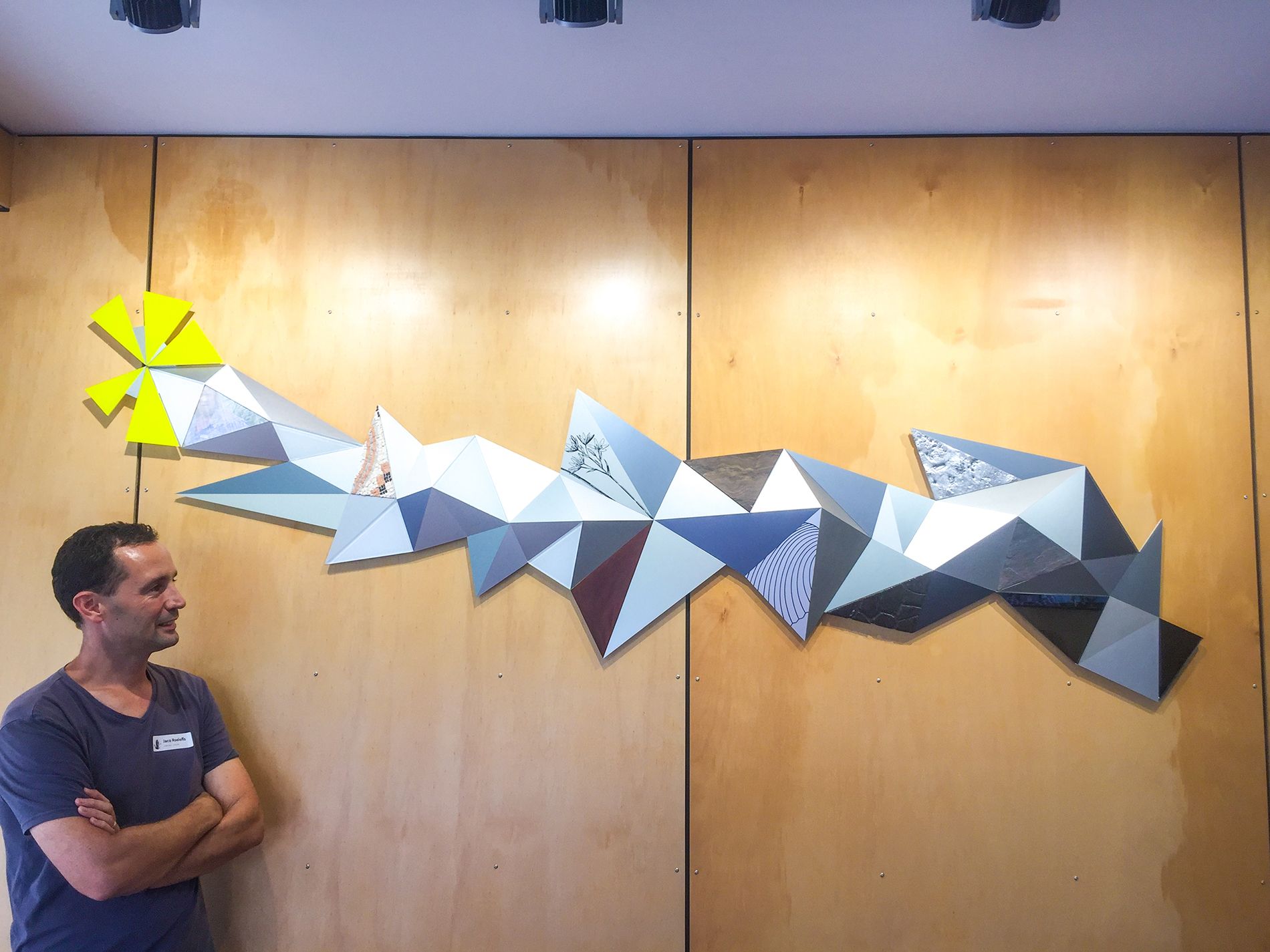
The Walk is a commissioned sculpture for Emmaus College in Jimboomba. The school takes its name from the village in Luke 24:13-35, where two disciples walk from Jerusalem to Emmaus and encounter the risen Christ. The college wanted a sculpture that connected to this founding story.
Form and materials
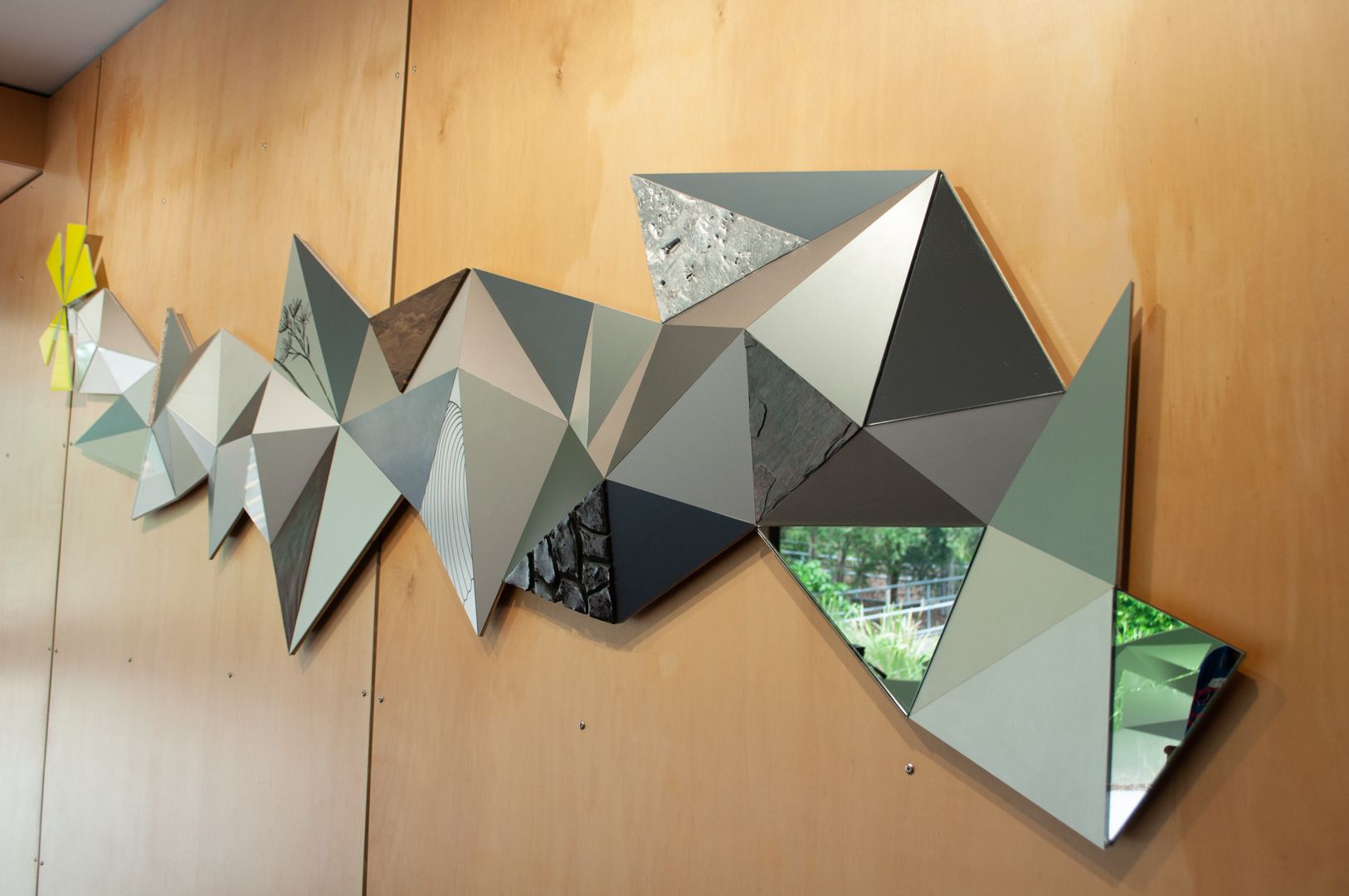
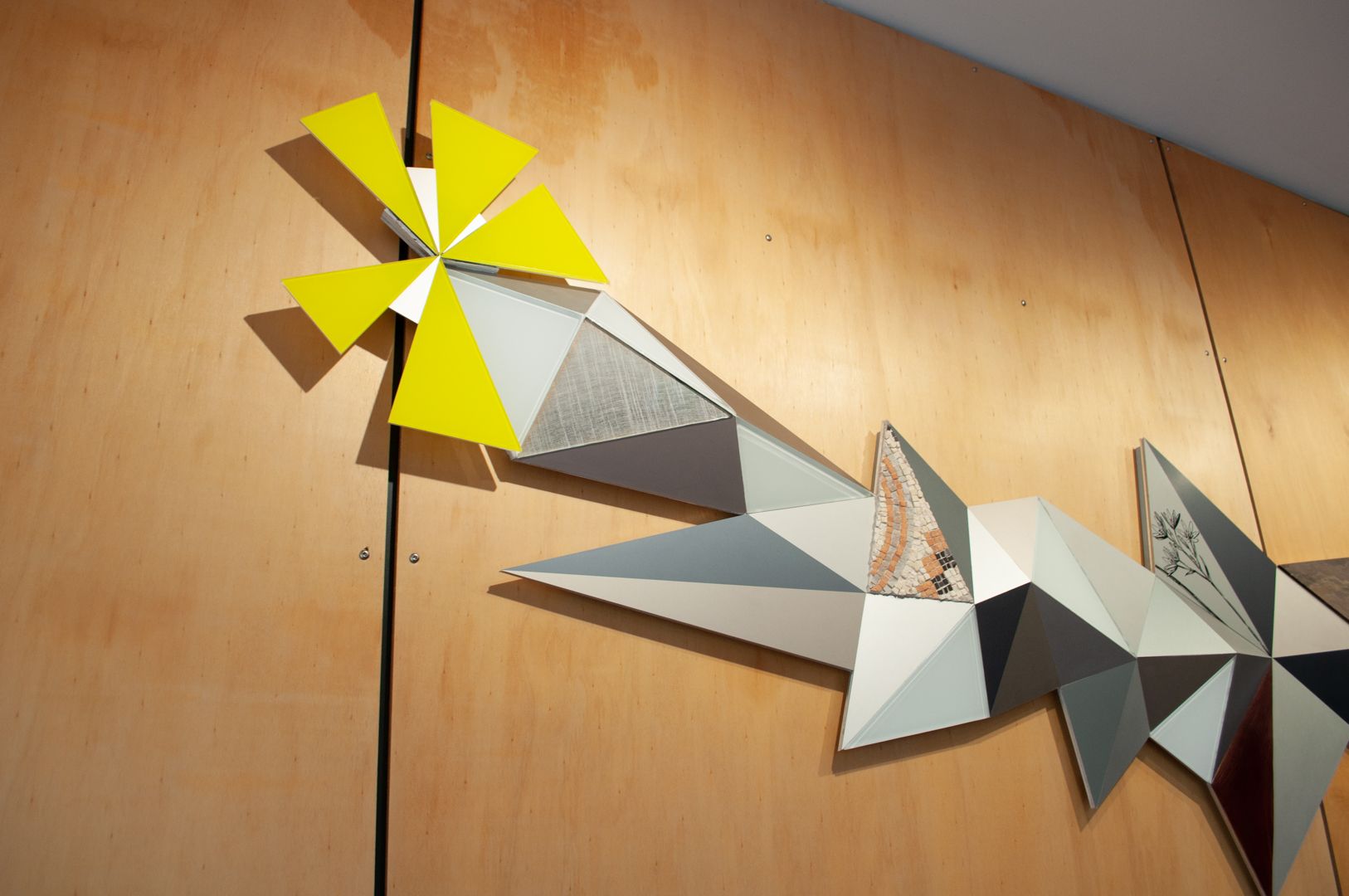
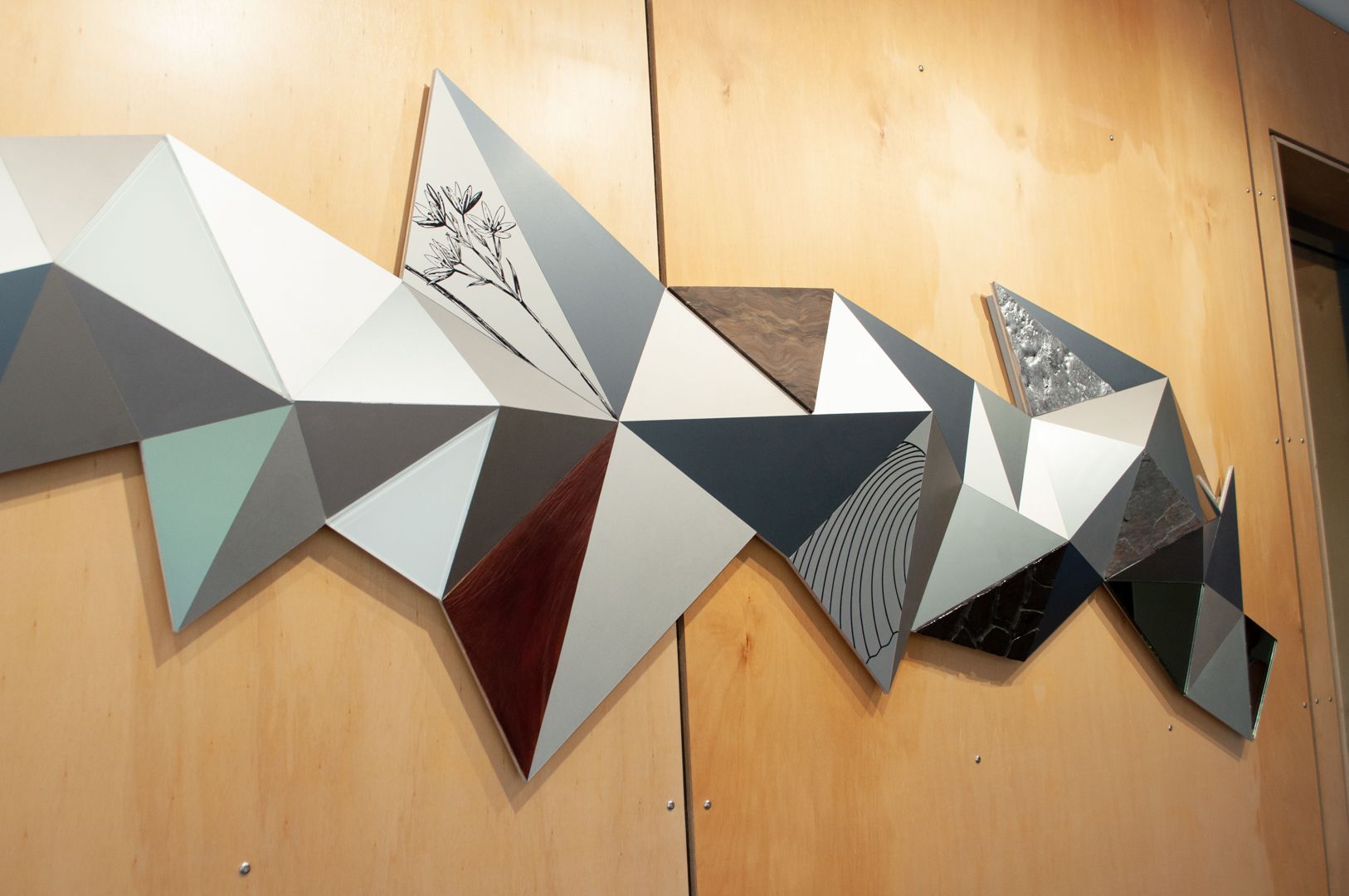
The sculpture uses 66 triangles arranged in the shape of a Yellow Star of Bethlehem, a flower native to rural Israel that still grows along the Jerusalem to Emmaus route today. The number matches the books of the Bible.
Sixty-five percent of the triangles are anodised aluminium in three tones: clear, nickel, and grey-blue. The remaining triangles use other materials: black mirror glass, black ceramic with a cracked mud texture, slate, hand-poured aluminium spill, petrified wood, leather, handmade terracotta mosaic tiles, white glass, fabric sealed in glass, and yellow glass.
Each material was chosen for its visual properties and connection to elements in the passage. The black mirror reflects viewers back at themselves. The aluminium spill has the organic flow of water. The slate has the cold weight of stone underfoot.
What viewers see
The sculpture hangs on the wall with dark tones at the right and bright tones at the top left. This follows the compass direction of the actual route: east to west-northwest, Jerusalem to Emmaus.
Colours move from black and grey at the beginning, through transitional browns and silvers in the middle, to white and yellow at the end. The progression follows the narrative arc: despair, learning, recognition.
The triangular geometry creates faceted surfaces that catch light differently throughout the day. The reflective materials (black mirror, aluminium, glass) shift as viewers move past.
Context
This was the first of three commissions for Emmaus College. Reflections followed in 2022. Emmaus Cross is completed in 2025.
The college uses The Walk as an educational resource. A printed booklet documents the material choices and their connections to scripture.
Materials
| Material | Meaning |
|---|---|
| Aluminium | Clear, Nickel, Grey tones throughout. |
| Black Mirror | Reflection, doubt, sadness; a sombre beginning. |
| Black Ceramic | Emptiness, Thrist, Dried mud emphasises drought. |
| Slate | The cold black and grey stone of the hard road. |
| Aluminium Spill | Listening, learning; living water. |
| Shell | The journey; this walk will become a pilgrimage. |
| Petrified Wood | Nature and the cross. |
| Yellow Star of Bethlehem | The flora of rural Israel then and today. |
| Leather | Warmth starting to appear, clothing, shoes and protection. |
| Mosaic | Colourful mosaics with geometrical patterns and inscriptions in Greek with names in the Roman baths in Emmaus. |
| Fabric | Jesus is revealed. |
| Yellow Glass | Jesus is the light; love, faith and hope. |